
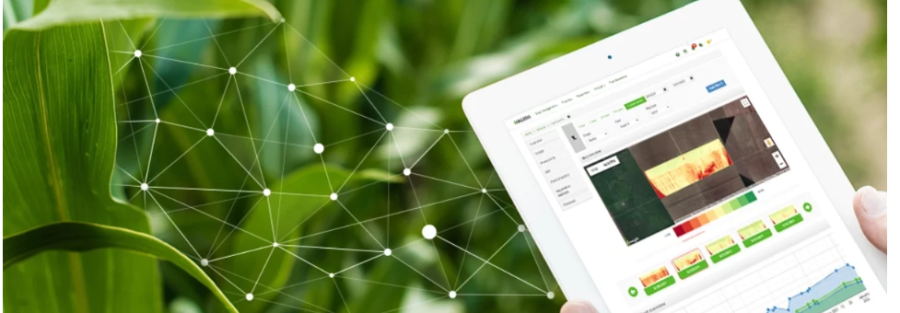
Introduction
Agriculture is experiencing one of the most significant transformations in its history. Population growth, climate change, resource constraints, and increasing market demands are forcing agricultural stakeholders to rethink traditional farming practices.
To meet these challenges, farmers and agribusinesses are increasingly adopting smart farming technology to improve productivity, reduce risks, and optimize resource use.
From mobile applications and GPS farm mapping to agricultural analytics and digital advisory systems, technology is enabling a new generation of data-driven agriculture.
Modern smart agriculture solutions are helping farmers, cooperatives, agribusinesses, governments, and development organizations make better decisions while building more efficient and sustainable food systems.
Platforms like AgroTrack Cloud are at the forefront of this transformation by connecting farmer data, production records, traceability systems, advisory services, and analytics within a single digital ecosystem.
What Is Smart Farming Technology?
Smart farming technology refers to the use of digital tools, data systems, automation, and advanced technologies to improve agricultural production and management.
Unlike traditional farming approaches that rely heavily on manual observations and paper records, smart farming uses real-time information to support decision-making.
Examples of smart farming technologies include:
Digital agriculture platforms
Farm management software
GPS farm mapping software
Crop monitoring platforms
Digital farmer advisory systems
Satellite monitoring systems
Mobile data collection applications
Artificial intelligence (AI) farming tools
Agricultural data analytics platforms
Agriculture traceability software
The goal is to create more productive, efficient, profitable, and sustainable agricultural systems.
Why Agriculture Needs Smart Farming Solutions
Agriculture faces numerous challenges that require innovative approaches.
Some of the most common challenges include:
Limited Access to Agricultural Information
Many farmers still lack timely access to agronomic advice, weather information, and best farming practices.
Without reliable information, productivity remains low and risks increase.
Fragmented Agricultural Data
Agricultural information is often scattered across paper forms, spreadsheets, and disconnected systems.
This limits visibility and makes decision-making difficult.
Climate Change and Environmental Risks
Changing weather patterns, prolonged droughts, floods, pests, and diseases continue to affect agricultural production worldwide.
Farmers need smarter systems that enable early detection and proactive management.
Increasing Demand for Traceability
Consumers and global markets increasingly require transparent and traceable supply chains.
Organizations must now provide verified information on product origin, production practices, and sustainability standards.
Smart agriculture solutions help address these challenges by providing timely data, improved visibility, and connected decision-making.
Mobile Platforms Are Driving Agricultural Digital Transformation
Mobile technology has become one of the most important enablers of digital agriculture.
Smartphones and tablets now allow agricultural stakeholders to collect, access, and share information directly from the field.
Modern mobile-based agricultural platforms support:
Farmer registration systems
Digital farmer profiles
Farm activity tracking
Input distribution management
Crop monitoring
Advisory delivery
Field inspections
Harvest reporting
Mobile-first solutions ensure that agricultural data is captured in real time, improving accuracy and operational efficiency.
AgroTrack Cloud is designed with mobile data collection capabilities, enabling organizations to digitize field operations even in remote farming environments.
Digital Farmer Profiles: The Foundation of Smart Agriculture
Smart agriculture begins with reliable farmer data.
A Farmer Management System enables organizations to create structured digital farmer profiles that serve as the foundation for agricultural planning and service delivery.
Digital farmer profiles may include:
Personal information
Farm location and size
Crop records
Production history
Input usage records
Advisory history
Cooperative membership
This information helps organizations understand farmers better and provide targeted interventions.
Reliable farmer data also supports:
Agricultural financing
Insurance programs
Input distribution
Traceability systems
Production forecasting
Digital farmer identities are becoming essential components of modern agricultural ecosystems.
GPS Farm Mapping and Precision Agriculture
Location intelligence plays a critical role in smart farming.
GPS Farm Mapping Software enables organizations to accurately map farm boundaries, measure land size, and monitor agricultural activities spatially.
GPS mapping provides numerous benefits:
Accurate farm records
Land verification
Production planning
Resource allocation
Risk assessment
Crop suitability analysis
When integrated with a Precision Agriculture Platform, spatial data can support highly targeted farming decisions.
Precision agriculture enables farmers to optimize:
Fertilizer application
Input usage
Water management
Crop management practices
This improves efficiency while reducing costs and environmental impact.
Crop Advisory Platforms Improve Productivity
Access to timely advice is one of the biggest determinants of agricultural success.
A modern Crop Advisory Platform allows farmers to receive relevant recommendations based on crop stage, local conditions, and production goals.
Digital advisory systems support:
Agronomist recommendations
Digital extension services
Pest and disease alerts
Weather information
Best practice guidance
Smart farming recommendations
Increasingly, artificial intelligence is being integrated into advisory systems to provide personalized support through AI farming assistants.
These systems help farmers make informed decisions and improve productivity.
Agricultural Data Analytics for Better Decision-Making
Data alone is not enough.
Agricultural organizations need tools that transform data into actionable insights.
An Agricultural Data Analytics Platform enables stakeholders to analyze information collected across farms, supply chains, and production systems.
Analytics can provide insights on:
Crop performance
Yield forecasting
Farmer productivity
Input utilization
Regional production trends
Supply chain performance
Data-driven decision-making allows organizations to allocate resources effectively and improve operational outcomes.
AgroTrack Cloud integrates analytics dashboards that support evidence-based agricultural planning.
Smart Agriculture Solutions and Supply Chain Transparency
Modern agriculture extends beyond production.
Organizations also require visibility across post-harvest processes and supply chains.
Agriculture Traceability Software enables end-to-end transparency from farm to consumer.
Key capabilities include:
Farm-to-fork traceability
QR code traceability
Produce batch tracking
Product history verification
Agricultural supply chain tracking
Traceability improves trust, supports compliance, and enables access to premium global markets.
As sustainability and responsible sourcing become increasingly important, traceability systems are becoming essential components of smart agriculture solutions.
Building Sustainable and Climate-Smart Farming Systems
Sustainability is now a strategic priority across agriculture.
Smart farming technologies support sustainable production by improving resource efficiency and reducing waste.
Examples include:
Optimized fertilizer recommendations
Better water management
Reduced input overuse
Improved crop health monitoring
Climate risk analysis
A Climate Smart Agriculture Platform enables organizations to monitor environmental indicators and promote sustainable farming practices.
These technologies support long-term agricultural resilience while improving productivity.
The Future of Smart Farming Technology
The future of agriculture will be increasingly connected, intelligent, and automated.
Emerging innovations include:
AI-powered farming assistants
Satellite crop monitoring
Predictive agricultural analytics
IoT-enabled farm monitoring
Autonomous agricultural systems
Digital agricultural marketplaces
Organizations that embrace smart farming technology today will be better positioned to remain competitive in a rapidly evolving agricultural landscape.
Why AgroTrack Cloud Is Supporting the Future of Smart Agriculture
AgroTrack Cloud is a comprehensive Digital Agriculture Platform designed to help agricultural organizations adopt modern smart farming technologies.
The platform combines:
Farmer onboarding software
Digital farmer profiles
GPS farm mapping software
Crop advisory platforms
Agriculture traceability software
Agricultural supply chain tracking
Agricultural analytics dashboards
By connecting stakeholders through trusted data, AgroTrack Cloud enables smarter, more efficient, and sustainable agricultural systems.
Ready to Digitize Your Agricultural Operations?
Whether you are an agribusiness, cooperative, NGO, exporter, government agency, or development partner, AgroTrack Cloud can help you implement smart agriculture solutions that improve productivity, transparency, and decision-making.
Request a Demo Today and discover how AgroTrack Cloud can accelerate your digital agriculture journey.
Visit: www.agrotrackcloud.com