
Introduction
Where did this produce come from?
Which farmer produced it?
Where is the farm located?
When was it harvested?
Which collection point handled it?
What happened to it after collection?
For modern agricultural businesses, these questions are becoming increasingly important.
Exporters, processors, aggregators, cooperatives, retailers, development organizations, and other value-chain stakeholders need better visibility into the movement of agricultural products. Buyers increasingly want confidence in sourcing information, while organizations need reliable records to support quality management, reporting, responsible sourcing, and operational decision-making.
This is where Agriculture Traceability Software becomes valuable.
AgroTrack Cloud provides digital tools that help organizations connect farmer information, farm records, production data, harvests, batches, and supply-chain movements into a more transparent agricultural ecosystem.
What Is Agriculture Traceability Software?
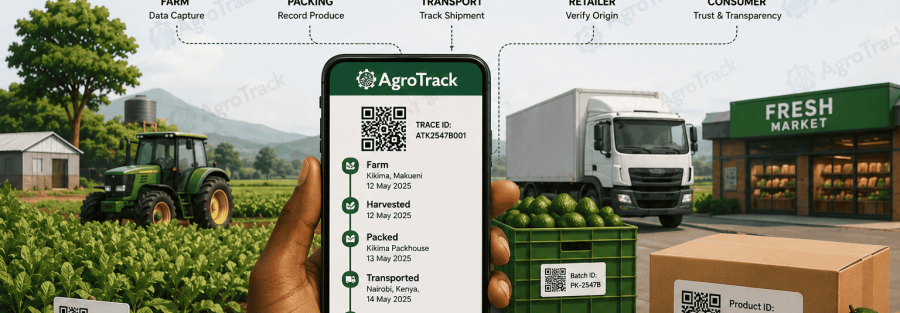
Agriculture traceability software is technology that helps organizations record and follow agricultural products through different stages of the value chain.
Instead of treating production and supply-chain information as separate records, a traceability system can create a connected digital history.
For example:
Farmer → Farm → Crop → Harvest → Collection → Batch → Buyer
Each stage can contribute information to the product’s digital history.
This gives organizations greater visibility into where products originate, how they move, and which agricultural activities are associated with them.
Why Agricultural Traceability Matters
Agricultural supply chains can involve many participants.
A single product may pass through farmers, cooperatives, aggregators, transporters, processors, exporters, distributors, and buyers.
When information is recorded manually at each stage, it can become difficult to maintain a consistent view of the product journey.
This creates challenges around:
- Origin verification
- Farmer identification
- Product tracking
- Quality management
- Supply planning
- Reporting
- Responsible sourcing
- Market requirements
A digital Food Supply Chain Traceability system can help organizations create more structured information throughout the journey.
Start Traceability at the Farm
Traceability should not begin when produce reaches a warehouse or processing facility.
It should begin much earlier—with the farmer and farm.
AgroTrack Cloud enables organizations to create Digital Farmer Profiles containing relevant farmer and agricultural information.
Farmer profiles can be connected to farm information, crop records, production activities, and other value-chain data.
This creates a stronger foundation for connecting agricultural products to their source.
For organizations working with large farmer networks, this can be particularly valuable.
Instead of simply knowing that a particular batch came from a certain region, organizations can build more detailed records around the farmers and farms contributing to production.
Connect Farms With Location Data
Knowing the farmer is only part of traceability.
Organizations also need to understand where production takes place.
AgroTrack Cloud provides GPS farm mapping capabilities that allow organizations to associate farmer records with farm locations.
This can provide greater visibility into:
- Farm locations
- Production regions
- Farm sizes
- Crop distribution
- Farmer concentration
- Sourcing areas
GPS Farm Mapping Software can therefore complement traceability by adding geographic context to agricultural supply-chain data.
Track Crops and Production
A traceable supply chain requires more than farmer information.
Organizations need to know what is being produced.
AgroTrack Cloud supports agricultural information around crops, production, farming activities, harvests, and related records.
This creates opportunities to connect:
Farmer + Farm + Crop + Production + Harvest
The result is a richer digital record that can support supply planning and downstream traceability.
QR Codes and Digital Product Histories
One of the most practical ways to improve product traceability is to create identifiable digital records for products or batches.
AgroTrack Cloud supports capabilities such as QR codes and batch IDs, allowing organizations to associate agricultural products with relevant information.
A digital product history can help connect information such as:
- Source farmer
- Farm
- Crop
- Harvest
- Collection
- Batch
- Quality information
- Supply-chain movement
This creates a stronger connection between agricultural production and the product moving through the value chain.
From Farmer to Buyer
Traceability becomes particularly useful when it extends beyond the farm.
AgroTrack Cloud supports the broader agricultural journey by connecting farmer and production information with aggregation, quality, buyers, and markets.
This can help organizations create visibility across:
Farmer → Collection → Aggregation → Processing → Buyer
For exporters and processors, this can support better sourcing visibility.
For cooperatives and aggregators, it can help connect farmer production to collected volumes.
For buyers, it can provide greater transparency around sourcing information.
Traceability Can Support Better Agricultural Management
Traceability is not only about compliance.
The data generated by a traceability system can also support everyday business decisions.
Organizations can gain insights into:
- Where supply originates
- Which farmers contribute to production
- Crop distribution
- Production volumes
- Harvest activity
- Quality records
- Collection patterns
- Supply availability
This information can support procurement, planning, farmer engagement, and supply-chain management.
In other words, traceability data can become a business intelligence asset.
Connecting Traceability With Farmer Management
One of the major strengths of an integrated platform is that traceability does not have to operate separately from farmer management.
AgroTrack Cloud connects traceability with other agricultural functions.
An organization can manage:
Farmer Registration
Create structured farmer records.
Farm Mapping
Capture farm locations and geographic information.
Crop Management
Record crops and production information.
Advisory
Support farmers through digital agricultural information and recommendations.
Input Management
Track agricultural inputs and service providers.
Harvest Management
Record production, harvesting, and collection information.
Traceability
Connect farmers and production to products and batches.
Market Management
Connect agricultural supply with buyers and market opportunities.
This creates a more complete Agricultural Value Chain Platform rather than a standalone traceability system.
Who Needs Agricultural Traceability Software?
Exporters
Exporters can use traceability technology to strengthen sourcing visibility and maintain structured records around agricultural products.
Processors
Processors can improve visibility into incoming agricultural supply and connect processing activities with source information.
Cooperatives
Cooperatives can organize farmer production and connect members with aggregated produce.
Aggregators
Aggregators can maintain better records around collection and product movement.
Agribusinesses
Agribusinesses can connect farmer management, production, sourcing, and supply-chain data.
Development Organizations
Development programs can connect farmer participation and agricultural production with program monitoring and reporting.
Why AgroTrack Cloud?
AgroTrack Cloud takes a broader approach to agricultural traceability.
Rather than treating traceability as a separate function, the platform connects it with the systems organizations need to manage agricultural operations.
This means organizations can build a connected digital journey:
Farmer → Farm → Crop → Production → Harvest → Collection → Batch → Market
The platform provides the digital infrastructure to help organizations manage this information more effectively.
AgroTrack Cloud combines:
- Digital farmer profiles
- Farmer onboarding
- Farmer database management
- GPS farm mapping
- Crop monitoring
- Digital advisory services
- Input management
- Harvest and aggregation records
- QR-code traceability
- Agricultural analytics
- Market connections
This connected approach can help organizations move from fragmented agricultural records toward a more transparent and data-driven value chain.
Build a More Transparent Agricultural Supply Chain
The agricultural sector is becoming increasingly data-driven.
Organizations need to understand not only what they buy or sell, but also where products originate, who produces them, how they move, and what information supports their journey.
A modern Agriculture Traceability Software solution can help create this visibility.
With AgroTrack Cloud, organizations can connect farmer data, farm locations, production, harvests, batches, and markets through a unified digital ecosystem.
The result is greater visibility from the farm to the market.
Ready to improve traceability across your agricultural value chain?
Request an AgroTrack Cloud demo and discover how the platform can support your organization’s farmer management, traceability, and supply-chain operations.