
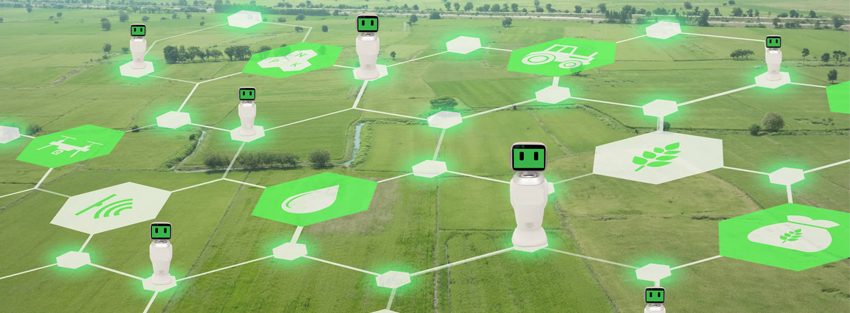
Agricultural organizations make decisions every day based on information about farmers, farms, crops, production, inputs, markets, and supply chains.
But what happens when that information is scattered across spreadsheets, paper forms, field reports, and separate databases?
The problem is not a lack of data. The problem is data fragmentation.
When farmer information is incomplete or difficult to access, organizations can struggle to plan production, coordinate field activities, measure program impact, connect farmers to markets, and respond to changing agricultural conditions.
A modern Farmer Management System can help solve this challenge by creating a centralized digital source of farmer and farm information.
This is where AgroTrack Cloud comes in.
What Is a Single Source of Truth in Agriculture?
A single source of truth means that an organization has one reliable digital system where critical agricultural information can be captured, updated, organized, and accessed by authorized users.
For an agricultural organization, this could include:
- Farmer profiles
- Farm locations
- Farm sizes
- Crops grown
- Production records
- Cooperative membership
- Farming activities
- Harvest information
- Input usage
- Quality records
- Traceability information
- Market and supply information
Instead of maintaining separate records for every function, organizations can connect these datasets within one Digital Agriculture Platform.
The Problem With Fragmented Farmer Data
Consider an organization working with several cooperatives across different regions.
The farmer registration team may have one spreadsheet.
The field officers may maintain another.
The production team may use separate records.
The procurement team may have its own supplier database.
The monitoring and evaluation team may request information from all of them before preparing a report.
This creates several risks:
Duplicate Records
The same farmer may appear multiple times across different systems.
Outdated Information
Farmer information can change, but old spreadsheets may continue circulating.
Limited Visibility
Management may struggle to obtain a complete picture of farmers, farms, and production.
Slow Reporting
Teams spend significant time collecting and reconciling information before generating reports.
Poor Coordination
Different departments may make decisions based on different versions of the same data.
A centralized farmer database management system can significantly reduce these challenges.
Building Complete Digital Farmer Profiles
A digital farmer profile should provide more than a name and telephone number.
AgroTrack Cloud enables organizations to capture structured information around:
- Personal and demographic details
- Farmer identification
- Contact information
- Cooperative membership
- Contract farmer records
- Farm locations
- Farm size
- Farm history
- Crops grown
- Livestock information
- Farming practices
- Production capacity
- Historical production
This creates a more complete picture of the agricultural producer.
With accurate digital farmer profiles, organizations can segment farmers, plan interventions, monitor participation, and improve farmer engagement.
Connect Farmer Data With Farm Location
Knowing who produces agricultural commodities is important.
Knowing where production happens adds another layer of intelligence.
AgroTrack Cloud supports GPS farm mapping, enabling organizations to capture farm locations and related farm information.
This can help organizations understand:
- Where farmers are concentrated
- Which regions produce particular crops
- Available production capacity
- Farm sizes
- Geographic distribution of farmer groups
- Areas requiring additional support
For organizations managing large farmer networks, GPS Farm Mapping Software can turn scattered field information into a clearer geographic picture of agricultural production.
Connect Farmers With Cooperatives
Agriculture is rarely an individual activity.
Farmers often operate through cooperatives, farmer groups, aggregators, or contract farming structures.
AgroTrack Cloud allows organizations to manage cooperative structures alongside farmer information.
This can support:
- Cooperative onboarding
- Member management
- Farmer grouping
- Aggregation structures
- Production planning
- Reporting
Instead of viewing farmers as isolated records, organizations can understand how farmers are organized within the wider agricultural ecosystem.
From Farmer Data to Production Intelligence
Farmer data becomes more valuable when it connects to production.
AgroTrack Cloud supports crop profiles, crop calendars, growth-stage tracking, farming activities, production planning, monitoring, and advisory services.
This allows organizations to move beyond the question:
“Who are our farmers?”
toward more useful questions:
“What are they producing?”
“Where are they producing it?”
“What is their production capacity?”
“What support do they need?”
“What supply can we expect?”
This is the difference between storing farmer information and using it as agricultural intelligence.
From Production Data to Traceability
The same data foundation can support agricultural traceability.
AgroTrack Cloud provides traceability capabilities including:
- QR codes
- Batch IDs
- Farmer-to-product linkage
- Digital product history
- Harvest records
- Quality information
- Supply chain movement tracking
This supports Agriculture Traceability Software requirements for organizations that need greater visibility from farm to market.
For exporters, processors, buyers, and other value chain stakeholders, connecting farmer information with product information can help strengthen sourcing transparency and trust.
Data That Supports Better Agricultural Decisions
A centralized agricultural database is valuable because it can be transformed into actionable insights.
AgroTrack Cloud provides analytics around:
- Farmer distribution
- Farm statistics
- Production insights
- Crop performance
- Yield analysis
- Production forecasting
- Regional trends
- Input usage
- Traceability
- Supply
- Quality
- Impact
An Agricultural Data Analytics Platform can therefore help organizations move from manual reporting to more informed operational and strategic planning.
Who Needs This?
A centralized farmer data system can support multiple types of agricultural organizations.
Agribusinesses
Manage farmer networks, production, sourcing, and supply visibility.
Cooperatives
Digitize members, organize production, and improve farmer coordination.
Exporters and Off-takers
Build stronger sourcing visibility and traceable supply chains.
Processors
Improve raw-material sourcing, quality management, and production planning.
Governments and Development Partners
Monitor farmer programs, measure impact, and support evidence-based agricultural planning.
Financial Institutions
Use structured farmer and production information as a foundation for future agricultural finance and insurance services.
AgroTrack Cloud: Connecting the Data Behind Agriculture
AgroTrack Cloud is designed to bring agricultural information together through one integrated Agricultural Value Chain Platform.
From:
Farmer → Farm → Production → Harvest → Market → Consumer
the platform connects farmer management, GPS mapping, crop monitoring, advisory services, input management, aggregation, traceability, and analytics.
The result is a more connected agricultural ecosystem where stakeholders can access the information they need to plan, monitor, coordinate, and grow.
Ready to Build a Better Agricultural Data Foundation?
Your organization may already have a large amount of farmer data.
The question is whether that data is connected, structured, accessible, and useful.
AgroTrack Cloud helps organizations turn fragmented agricultural information into a connected digital ecosystem that supports better farmer management, production planning, traceability, analytics, and value chain collaboration.
Ready to move from fragmented records to connected agricultural intelligence?