
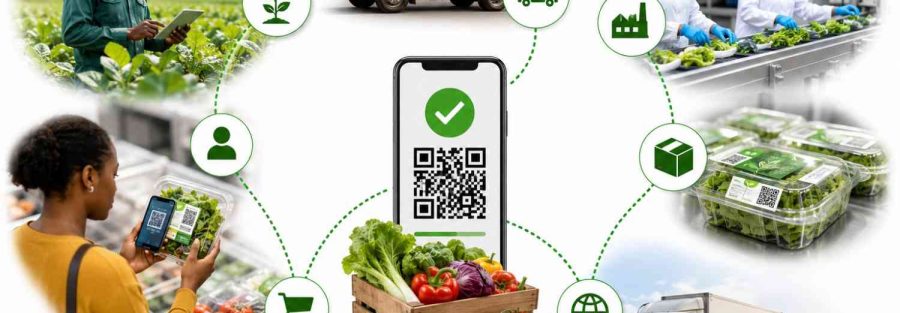
The global food industry is undergoing a significant transformation. Consumers want to know where their food comes from, buyers demand proof of origin, exporters must comply with strict regulations, and retailers increasingly prioritize responsible sourcing practices.
In this environment, transparency is no longer optional—it has become a competitive advantage.
Traditional agricultural supply chains often rely on fragmented records, paper documentation, and disconnected systems that make it difficult to verify product origins, monitor quality, or respond quickly to food safety concerns. As agricultural trade becomes more global and regulatory requirements continue to evolve, organizations need better visibility across the entire supply chain.
This is where Food Supply Chain Traceability becomes essential.
Modern Supply Chain Tracking Software enables agricultural organizations to track products from farm to consumer, providing trusted records that improve transparency, strengthen compliance, and build confidence among buyers and consumers.
AgroTrack Cloud provides integrated traceability tools that help organizations create transparent agricultural value chains powered by trusted data.
What Is Food Supply Chain Traceability?
Food Supply Chain Traceability is the ability to track agricultural products throughout every stage of the supply chain, from production to final consumption.
A traceability system captures and stores information about:
- Farmers and producers
- Farm locations
- Crop production activities
- Harvest dates
- Batch records
- Processing activities
- Transportation history
- Storage conditions
- Distribution channels
- Final destination markets
This creates a complete digital history for every product moving through the supply chain.
When combined with modern Supply Chain Tracking Software, organizations gain real-time visibility into product movement and supply chain performance.
Why Traceability Matters More Than Ever
Global food supply chains are becoming increasingly complex.
Products often move through multiple stakeholders, including farmers, aggregators, processors, distributors, exporters, retailers, and consumers.
Without traceability, organizations face challenges such as:
- Difficulty verifying product origins
- Limited quality visibility
- Slow responses to food safety incidents
- Compliance challenges
- Reduced buyer confidence
- Increased operational risks
Modern traceability systems provide the transparency required to manage these challenges effectively.
Building Trust with Buyers and Consumers
Today’s consumers care about more than price and availability.
They increasingly want information about:
- Where food was produced
- Who produced it
- Farming practices used
- Sustainability standards
- Quality assurance measures
- Ethical sourcing practices
Similarly, buyers and retailers require verified information to protect their brands and meet customer expectations.
Food Supply Chain Traceability creates the transparency necessary to build trust throughout the agricultural ecosystem.
Supporting Export Compliance and Market Access
International markets continue to introduce stricter requirements for traceability and food safety documentation.
Exporters often need to demonstrate:
- Product origin
- Production history
- Quality inspections
- Certification status
- Compliance with regulations
- Sustainability practices
Without reliable records, access to premium export markets becomes increasingly difficult.
A modern Supply Chain Tracking Software solution enables exporters to maintain complete digital records that support compliance and reduce administrative burdens.
Improving Food Safety and Risk Management
Food safety incidents can have serious financial and reputational consequences.
When contamination or quality issues occur, organizations must quickly identify affected products and trace them back to their source.
Traceability systems enable organizations to:
- Identify affected batches
- Locate products quickly
- Conduct targeted recalls
- Minimize financial losses
- Protect consumers
- Maintain regulatory compliance
Rapid response capabilities reduce risk while improving operational resilience.
Linking Farmers to Finished Products
Effective traceability begins at the farm level.
A strong traceability system connects products directly to:
- Verified farmer identities
- GPS farm locations
- Production records
- Input usage history
- Harvest data
- Quality inspections
This farmer-to-product linkage forms the foundation of transparent agricultural supply chains.
By integrating Digital Farmer Profiles and GPS Farm Mapping Software, organizations create trusted records that support sourcing and compliance objectives.
Using QR Code Traceability for Product Verification
QR code technology is becoming a powerful tool for agricultural traceability.
Each batch or product can be assigned a unique QR code that provides access to its digital history.
Consumers, buyers, and regulators can verify information such as:
- Farm origin
- Production dates
- Processing details
- Quality records
- Certifications
- Distribution history
QR code traceability improves transparency while enhancing consumer confidence.
Strengthening Agricultural Value Chains
Traceability benefits every participant in the agricultural ecosystem.
Farmers gain access to premium markets.
Processors improve sourcing visibility.
Exporters strengthen compliance.
Retailers enhance consumer trust.
Governments improve food safety oversight.
Consumers gain confidence in product quality and origin.
An integrated Agricultural Value Chain Platform ensures that information flows efficiently between stakeholders while improving collaboration and accountability.
Supporting Sustainability and ESG Reporting
Sustainability reporting is becoming increasingly important across global supply chains.
Buyers and investors want evidence of responsible sourcing and environmental stewardship.
Traceability systems support:
- Climate-smart agriculture reporting
- Responsible sourcing verification
- ESG performance monitoring
- Carbon footprint assessments
- Certification compliance
- Sustainability audits
These capabilities help organizations meet growing environmental and social expectations.
The Role of Data Analytics in Supply Chain Visibility
Traceability generates valuable operational data that can improve decision-making.
An Agricultural Data Analytics Platform can analyze supply chain information to provide insights into:
- Supply volumes
- Product movement
- Quality trends
- Processing performance
- Market demand
- Regional sourcing patterns
These insights help organizations optimize operations while improving supply chain efficiency.
The Future of Supply Chain Tracking Software
The next generation of traceability solutions will integrate advanced technologies such as:
- Artificial intelligence
- Blockchain verification
- IoT sensors
- Satellite monitoring
- Predictive analytics
- Automated compliance reporting
These technologies will further improve transparency and accountability across global food systems.
Why AgroTrack Cloud Prioritizes Traceability
AgroTrack Cloud was designed to strengthen transparency throughout agricultural value chains.
The platform combines:
- Digital farmer profiles
- GPS farm mapping software
- Crop monitoring tools
- Agriculture traceability software
- QR code traceability
- Supply chain tracking software
- Agricultural analytics
- Market linkage capabilities
This integrated approach helps organizations build trusted supply chains that support growth, compliance, and sustainability.
Ready to Build Transparent Agricultural Supply Chains?
Trust is becoming one of the most valuable assets in agriculture.
Whether you are an exporter, processor, cooperative, government agency, NGO, or agribusiness, AgroTrack Cloud provides the tools needed to create transparent, traceable, and data-driven agricultural ecosystems.
Request a Demo Today and discover how AgroTrack Cloud can help your organization improve visibility and build trust through food supply chain traceability.
Visit: www.agrotrackcloud.com