
Smallholder farmers are the backbone of agriculture across Africa and much of the developing world.
They produce the majority of food consumed locally, support rural economies, and sustain millions of households. Yet despite their critical role, many smallholders continue to face the same challenges year after year — low yields, limited information, poor market access, and unstable incomes.
The problem is not effort or commitment.
It’s access.
Access to the right knowledge.
Access to reliable markets.
Access to trusted data.
Today, digital technology is helping close this gap. By combining data-driven advisory services with direct market linkages, smallholder farmers are gaining the tools they need to farm smarter and earn more.
The Challenges Smallholders Face
Across many regions, farmers make decisions based on guesswork rather than reliable information.
Common challenges include:
-
Unpredictable weather patterns
-
Pests and diseases
-
Limited access to extension services
-
High input costs
-
Middlemen reducing profits
-
Lack of visibility to buyers
-
Delayed or unfair payments
Without timely guidance or stable markets, even hard-working farmers struggle to improve productivity and income.
Why Advisory Matters
Good farming decisions depend on good information.
Knowing when to plant, what inputs to use, how to manage pests, or when to harvest can significantly affect yields and profitability.
Traditionally, advisory support comes from occasional extension visits or generic radio messages. While helpful, these approaches often lack personalization.
Data-driven advisory changes this.
By using farmer profiles, farm locations, weather data, and crop information, advisory services can deliver:
-
Timely weather alerts
-
Pest and disease warnings
-
Crop-specific best practices
-
Fertilizer and input recommendations
-
Seasonal planning guidance
Instead of one-size-fits-all advice, farmers receive recommendations tailored to their specific crops and conditions.
This leads to better decisions and better results.
The Importance of Market Access
Even when farmers produce more, another challenge remains — selling at the right price.
Many smallholders rely on informal buyers or local middlemen, often with little negotiating power. Prices fluctuate, payments delay, and farmers lack visibility into demand.
Market access is just as important as production.
When farmers are directly connected to cooperatives, aggregators, or buyers, they gain:
-
Guaranteed offtake
-
Transparent pricing
-
Reduced exploitation
-
Faster payments
-
Stable income streams
Reliable markets provide confidence to invest in better farming practices.
The Power of Combining Data and Markets
Advisory alone improves yields. Market access alone improves income. But when combined, the impact multiplies.
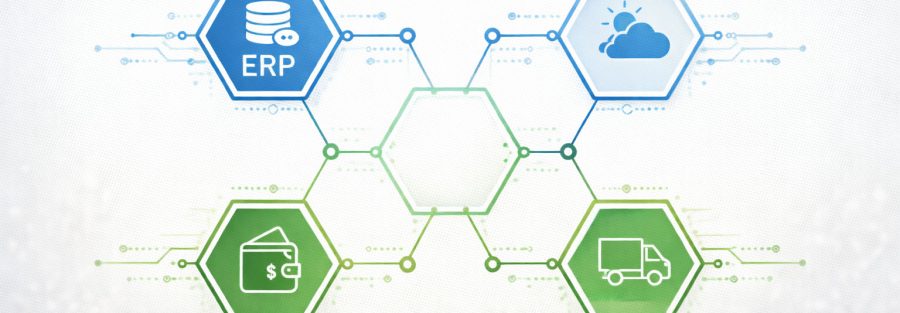
This is where digital ecosystems become powerful.
When farmers are registered and profiled digitally:
-
Advisors understand their needs
-
Buyers know their production capacity
-
Financial institutions assess their creditworthiness
-
Programs deliver targeted support
Data connects everything.
Farmers become visible participants in the value chain rather than isolated producers.
Real Benefits for Smallholders
When supported by data-driven advisory and market linkages, farmers experience:
-
Increased yields
-
Reduced losses
-
Lower input waste
-
Higher and more stable incomes
-
Improved financial access
-
Stronger bargaining power
Most importantly, they gain confidence and control over their livelihoods.
Technology becomes an enabler — not a barrier.
How AgroTrack Supports Smallholder Empowerment
At AgroTrack, empowering farmers is at the heart of what we build.
Our platform helps smallholders by:
-
Digitally registering and profiling farmers
-
Mapping farms with GPS for accurate planning
-
Delivering targeted advisory support
-
Connecting farmers with buyers and cooperatives
-
Enabling traceability and fair transactions
-
Providing trusted data for finance and insurance
By bringing farmers, advisors, and markets onto one connected system, AgroTrack helps transform fragmented agriculture into an inclusive ecosystem where everyone benefits.
The future of smallholder farming is not about working harder — it’s about working smarter.
With the right information and the right connections, smallholders can compete, grow, and thrive.
Data-driven advisory and market access are no longer luxuries. They are necessities for sustainable agricultural development.
Because when farmers are empowered with knowledge and opportunity, entire communities prosper.